

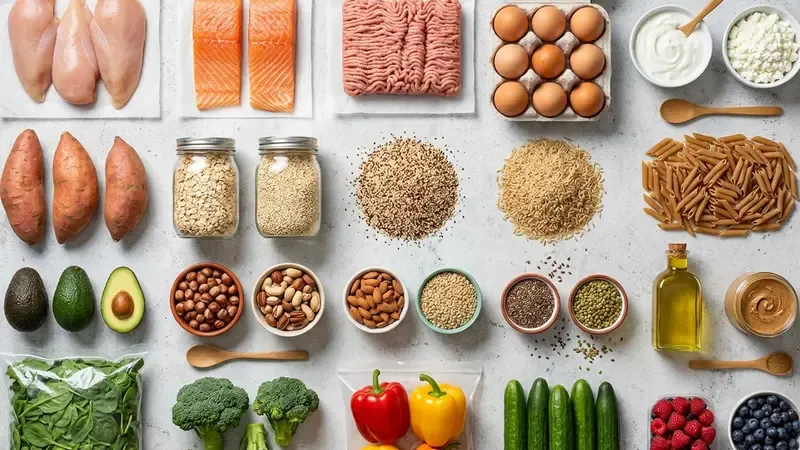
The Ultimate Macro Friendly Grocery List
The Ultimate Macro Friendly Grocery List For 2025
What Makes a Grocery List 'Macro Friendly'?
A “macro friendly” grocery list is a shopping plan designed to stock your kitchen with foods that make it easy to hit your specific macronutrient targets. Macronutrients, or “macros,” are the three main nutrients your body needs in large amounts: protein, carbohydrates, and fats. Each plays a vital role in your body's function, from building muscle and repairing tissue to providing energy for workouts and daily life.
Unlike a generic healthy shopping list, a macro friendly list is strategic. It prioritizes whole foods with clear macro profiles, such as lean chicken breast (mostly protein), sweet potatoes (mostly carbohydrates), and avocados (mostly fats). This approach simplifies meal prep and tracking, taking the guesswork out of hitting your daily goals, whether you're aiming for fat loss, muscle gain, or body recomposition.
Before you even think about heading to the store, the most crucial first step is understanding your personal needs. Your ideal macro intake depends on factors like your age, weight, height, activity level, and specific goals. To get a precise, science-backed starting point, we highly recommend using the MealPrepTools.com Macro Calculator. It will provide you with the personalized daily targets that will form the foundation of your shopping list.
Lean Protein: The Foundation of Your List
Protein is the cornerstone of any macro-focused diet. It's essential for muscle repair and growth, and it's also the most satiating macronutrient, meaning it helps you feel fuller for longer, which is a huge advantage when managing your calorie intake. When building your grocery list, aim to select several sources of high-quality, lean protein to ensure variety throughout the week.
Your goal is to choose options that provide a high amount of protein relative to their fat and carbohydrate content. This gives you more control and flexibility when adding other foods to your meals to meet your specific carb and fat targets. Prioritizing protein at the grocery store sets you up for successful meal prepping and consistent results.
Here are some top-tier protein sources to add to your cart:
- Poultry: Chicken breast (skinless), turkey breast, lean ground turkey (93/7 or leaner)
Lean Meats: Top sirloin steak, lean ground beef (90/10 or leaner), pork loin, bison
Fish & Seafood: Salmon, cod, tilapia, tuna (canned in water), shrimp
Dairy & Eggs: Plain Greek yogurt, cottage cheese, eggs and egg whites, whey or casein protein powder
Plant-Based: Tofu, tempeh, edamame, lentils, chickpeas, plant-based protein powder
Smart Carbohydrates for Sustained Energy
Carbohydrates are your body's primary and preferred energy source. They fuel your brain, power your workouts, and replenish your glycogen stores post-exercise. A macro friendly approach focuses on selecting complex, nutrient-dense carbohydrates that provide a slow, sustained release of energy, rather than simple sugars that can cause energy spikes and crashes.
These smart carbs are typically high in fiber, which aids in digestion and contributes to feelings of fullness. Incorporating a variety of these foods ensures you have the fuel you need for performance and recovery. When shopping, look for whole, unprocessed options whenever possible.
Stock up on these high-quality carbohydrate sources:
- Whole Grains: Rolled oats, steel-cut oats, quinoa, brown rice, whole-wheat bread and pasta
Starchy Vegetables: Sweet potatoes, white potatoes, butternut squash, corn, peas
Legumes: Black beans, kidney beans, chickpeas, lentils (these are also a great source of protein!)
Fruits: Berries (strawberries, blueberries, raspberries), bananas, apples, oranges
Healthy Fats for Hormones and Overall Health
Dietary fat is often misunderstood, but it is absolutely essential for your health. Healthy fats play a crucial role in hormone production, brain function, and the absorption of fat-soluble vitamins (A, D, E, and K). The key is to focus on unsaturated fats while limiting saturated and trans fats.
Because fats are the most calorie-dense macronutrient (9 calories per gram, compared to 4 for protein and carbs), a little goes a long way. This is why tracking them is so important. When adding fats to your list, think in terms of quality and purpose—as a finishing touch to a meal, a satisfying snack, or a cooking medium.
Add these healthy fat sources to your shopping list:
- Whole Food Sources: Avocados, whole nuts (almonds, walnuts, cashews), seeds (chia, flax, pumpkin, hemp)
Oils: Extra virgin olive oil, avocado oil, coconut oil
Butters & Spreads: Natural peanut butter, almond butter (check for no added sugar)
Fatty Fish: Salmon, mackerel, sardines (these are also excellent protein sources)
Fillers and Flavor: High-Volume, Low-Macro Foods
One of the biggest challenges when managing nutrition is hunger. This is where high-volume, low-macro foods become your secret weapon. These are primarily non-starchy vegetables that are packed with fiber, water, vitamins, and minerals but contain very few calories and macros. You can eat large quantities of them to fill your plate and your stomach without significantly impacting your macro count.
In addition to vegetables, your list should include a variety of herbs, spices, and low-calorie condiments. These items are key to making your meal prep delicious and sustainable. Bland, boring food is the fastest way to fall off your plan. By stocking your pantry with flavor enhancers, you can create countless meal combinations from the same core ingredients.
Don't forget these essentials:
- Non-Starchy Vegetables: Spinach, kale, broccoli, cauliflower, bell peppers, cucumbers, zucchini, asparagus, mushrooms, onions
Herbs & Spices: Garlic, salt, pepper, paprika, oregano, cumin, cinnamon, chili powder
Low-Calorie Condiments: Hot sauce, mustard, soy sauce (or tamari), vinegar, salsa, sugar-free ketchup
Putting It All Together: Your Meal Prep Shopping Strategy
Now that you understand the key components, it's time to build your actual grocery list. A simple and effective strategy is to choose a few items from each macro category to last you for the week. This prevents decision fatigue and ensures you have a balanced variety of ingredients to work with for your meal prep.
A great starting point for a week of meals is the "3-3-2-5" method: select 3 protein sources, 3 carbohydrate sources, 2 healthy fat sources, and at least 5 different non-starchy vegetables and flavor enhancers. For example, you might choose chicken breast, ground turkey, and eggs for protein; sweet potatoes, brown rice, and oats for carbs; avocados and olive oil for fats; and a mix of broccoli, spinach, bell peppers, onions, and garlic for volume and flavor.
To make this process even more efficient, use the MealPrepTools.com Meal Planner to lay out your meals for the week. Once your plan is set, our Grocery Generator can automatically create a perfectly organized shopping list based on your planned meals. This eliminates waste and ensures you buy exactly what you need to stay on track with your macros.
Pro Tips for Macro-Focused Grocery Shopping
Navigating the grocery store with a macro-focused mindset can be streamlined with a few pro tips. First, become a master of reading nutrition labels. Pay close attention to the serving size and the grams of protein, carbs, and fat per serving. This is non-negotiable for accurate tracking.
Second, shop the perimeter of the store. This is typically where you'll find the whole, unprocessed foods like fresh produce, meats, and dairy. The inner aisles are often filled with processed, packaged goods that can be high in hidden sugars and unhealthy fats. While some staples like rice, oats, and canned goods are in the aisles, make the perimeter your primary focus.
Finally, tailor your list to your specific fitness goals. If you're in a muscle-building phase (bulking), you might add more calorie-dense items like whole milk, fattier cuts of meat, and more nuts. If you're in a fat-loss phase (cutting), you'll want to prioritize leaner proteins, lower-calorie carbs, and plenty of high-volume vegetables. Use the MealPrepTools.com Macro Splitter to see how your macro ratios might change for different goals and adjust your list accordingly.
Key Takeaways
- Determine your personal macro targets using a reliable tool like the MealPrepTools.com Macro Calculator before you shop.
- Build your list around lean protein sources, as they are crucial for muscle growth and satiety.
- Prioritize complex carbohydrates like whole grains and starchy vegetables for sustained energy.
- Incorporate healthy fats from sources like avocados, nuts, and olive oil for hormone health.
- Use non-starchy vegetables and low-calorie seasonings to add volume and flavor without excess calories.
- Plan your weekly meals to create a targeted, efficient grocery list and minimize food waste.
- Always read nutrition labels to make informed choices that align with your specific macro goals.

