

The Ultimate High Protein Foods List For Meal Prep In 2025
The Ultimate High Protein Foods List For Meal Prep In 2025
Why Protein Is a Macronutrient Powerhouse
Protein is far more than just a buzzword in the fitness community; it's a fundamental building block for your body. Composed of amino acids, this essential macronutrient is crucial for building and repairing tissues, from your muscles and bones to your skin and hair. When you engage in physical activity, you create micro-tears in your muscle fibers. Protein provides the necessary components to repair this damage, leading to stronger, more resilient muscles over time.
Beyond muscle synthesis, protein plays a vital role in satiety and weight management. Foods high in protein are digested more slowly than carbohydrates, which helps you feel fuller for longer after a meal. This can significantly reduce overall calorie intake by curbing cravings and preventing mindless snacking. Furthermore, the body expends more energy digesting protein compared to fats and carbs—a phenomenon known as the thermic effect of food (TEF). This means that simply by choosing high-protein options, you can give your metabolism a slight but meaningful boost.
How Much Protein Do You Really Need?
The question of "how much protein?" doesn't have a one-size-fits-all answer. The Recommended Dietary Allowance (RDA) is a modest 0.8 grams of protein per kilogram of body weight, which is the minimum you need to meet basic nutritional requirements and prevent deficiency. However, for individuals who are active, looking to build muscle, or aiming for fat loss, this number is often insufficient.
Active individuals and those with specific fitness goals typically require more—anywhere from 1.2 to 2.2 grams of protein per kilogram of body weight. The exact amount depends on factors like your age, sex, activity level, and body composition. For example, a strength athlete will have higher needs than a sedentary office worker. Instead of guessing, it's best to determine your personalized needs.
To eliminate the guesswork and get a precise target tailored to your unique goals, we highly recommend using the MealPrepTools.com Macro Calculator. Our tool will provide you with a detailed breakdown of your daily protein, carb, and fat requirements, giving you a clear target to hit with your meal prep each week.
Top Animal-Based High Protein Foods
Animal-based sources are often called 'complete' proteins because they contain all nine essential amino acids your body cannot produce on its own. They are incredibly efficient for muscle building and are a staple in many meal prep routines. When selecting animal proteins, focus on lean cuts to maximize protein content while managing fat intake.
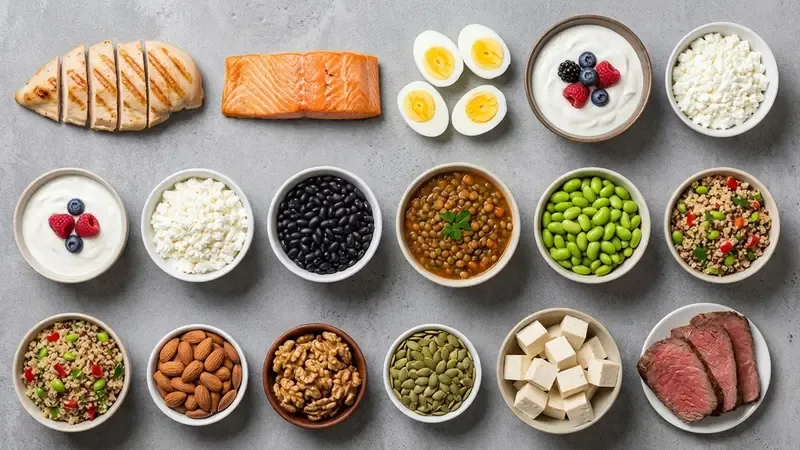
Here are some of the best animal-based options to add to your grocery list, along with their approximate protein content:
- Chicken Breast (Skinless): A meal prep champion, providing about 31g of protein per 100g (3.5 oz) cooked.
- Turkey Breast (Skinless): Very similar to chicken, offering around 29g of protein per 100g.
- Lean Beef (e.g., Sirloin, 93/7 Ground Beef): A great source of iron and B12, delivering 25-30g of protein per 100g.
- Salmon: Packed with omega-3 fatty acids, salmon provides approximately 25g of protein per 100g.
- Tuna (Canned in Water): An affordable and convenient option with about 28g of protein per 100g.
- Eggs: A nutritional powerhouse, one large egg contains about 6g of high-quality protein.
- Greek Yogurt (Plain): Excellent for snacks and breakfast, offering up to 20g of protein per 170g (6 oz) serving.
- Cottage Cheese (Low-Fat): A slow-digesting casein protein source, perfect before bed, with about 25g of protein per cup.
Excellent Plant-Based High Protein Foods
A high-protein diet is entirely achievable without animal products. Plant-based proteins are not only effective for muscle building but also rich in fiber, vitamins, and minerals. While some plant proteins are 'incomplete' (lacking one or more essential amino acids), eating a varied diet throughout the day easily provides all the necessary components.
These plant-based powerhouses are perfect for diversifying your meal prep:
- Lentils: A budget-friendly star, lentils contain about 18g of protein and 15g of fiber per cooked cup.
- Chickpeas (Garbanzo Beans): Versatile and delicious, chickpeas offer around 15g of protein per cooked cup.
- Tofu (Firm): Made from soybeans, tofu packs about 22g of protein per half-block (approx. 120g).
- Tempeh: A fermented soybean cake with a nutty flavor, providing an impressive 34g of protein per cup.
- Edamame (Shelled): A fantastic snack or meal addition, with 18g of protein per cooked cup.
- Quinoa: A 'complete' plant protein, quinoa has 8g of protein per cooked cup and serves as a great base for meals.
- Hemp Seeds: Easy to sprinkle on yogurt or salads, three tablespoons deliver 10g of protein.
- Seitan: Made from wheat gluten, it has a meaty texture and an exceptionally high protein content, often 25g or more per 100g.
Smart High Protein Snacks for Busy Days
Hitting your protein goal isn't just about your main meals. Smart snacking is key to staying on track, managing hunger between meals, and ensuring your muscles have a steady supply of amino acids for recovery. The ideal protein snack is convenient, portable, and, of course, delicious.
Instead of reaching for a bag of chips, stock your pantry and fridge with these easy options:
- Greek Yogurt Cups: Single-serving containers are perfectly portioned and easy to grab.
- Hard-Boiled Eggs: Boil a batch at the beginning of the week for a simple, effective snack.
- Beef or Turkey Jerky: Look for brands with minimal added sugar and preservatives.
- Portioned Nuts and Seeds: Almonds, pumpkin seeds, and pistachios offer a good mix of protein, healthy fats, and fiber.
- Protein Shakes: The ultimate convenience. Mix a scoop of whey, casein, or plant-based protein powder with water or milk.
- Roasted Chickpeas: A crunchy, savory, and high-fiber alternative to traditional snacks.
- Cottage Cheese: Pair a single-serving container with some fruit for a balanced, satisfying snack.
Budget-Friendly Ways to Boost Your Protein Intake
Eating a high-protein diet doesn't have to be expensive. While premium cuts of meat and specialty supplements can strain your wallet, many of the most potent protein sources are incredibly affordable. Strategic shopping and focusing on versatile staples are key to building a high-protein meal plan on a budget.
Prioritize these cost-effective foods during your next grocery run:
- Eggs: Ounce for ounce, eggs remain one of the most affordable and highest-quality protein sources available.
- Canned Tuna or Salmon: Often cheaper than fresh fish, canned varieties provide the same protein and omega-3 benefits.
- Legumes (Lentils, Beans, Chickpeas): Buying dried legumes in bulk is exceptionally cheap and provides a massive amount of protein and fiber.
- Ground Turkey or Chicken: Typically less expensive than whole cuts or beef, ground poultry is perfect for a wide range of recipes.
- Tofu: This plant-based staple is a low-cost protein that absorbs the flavor of whatever you cook it with.
- Whey Protein Powder (in bulk): While the initial cost may seem high, buying a larger tub of protein powder often brings the price per serving down significantly.
Integrating High Protein Foods Into Your Meal Prep
Knowing what foods are high in protein is only half the battle; the other half is consistently incorporating them into your daily routine. This is where meal prepping becomes your greatest asset. By planning and preparing your meals in advance, you can ensure you hit your protein targets every single day without the stress of last-minute decisions.
Start by dedicating a few hours each week to your meal prep. Batch-cook a versatile protein source like chicken breast, ground turkey, or lentils that you can use in various dishes throughout the week. For example, grilled chicken can be used in salads, wraps, and grain bowls. A large batch of lentils can become a soup, a salad topping, or a side dish. Portion out snacks like Greek yogurt, nuts, and hard-boiled eggs into ready-to-go containers.
By having these high-protein components ready, assembling a healthy meal takes minutes, not hours. This system not only saves you time but also removes the temptation to opt for less healthy, low-protein convenience foods when you're busy or tired. It's the most effective strategy for turning your nutritional goals into a sustainable lifestyle.
Key Takeaways
- Protein is essential for muscle repair, satiety, and metabolic health.
- Your ideal protein intake depends on your activity level and goals; use a macro calculator for a personalized target.
- Incorporate lean animal sources like chicken, fish, and Greek yogurt for complete proteins.
- Don't overlook plant-based powerhouses like lentils, tofu, and tempeh, which are rich in fiber and nutrients.
- Plan for high-protein snacks like hard-boiled eggs and protein shakes to stay on track between meals.
- You can achieve a high-protein diet on a budget by focusing on foods like eggs, legumes, and canned tuna.
- Meal prepping is the most effective strategy for consistently hitting your daily protein goals.

